DashForge
← All work

Mentoring programmes

Fair matching and regular check-ins for mentoring programmes

Mentor is for the programme lead with ninety pairs to make and a spreadsheet sorted by the date people applied.

CloudCustom

/programme
Mentor on a desktop: The programme
Mentor on a phone: The programme
About Mentor

Mentor is for the programme lead with ninety pairs to make and a spreadsheet sorted by the date people applied. Matching in that order hands the best mentors to whoever signed up first, and once pairs start meeting it's hard to tell which ones have stopped. Mentor matches the whole group at once on shared topics and free days, and shows the reason for every pair so the lead can check it. After launch it prompts each pair on the schedule they agreed, and the lead sees which pairs have gone quiet while there's still time to help.

Matching
All at once

never in sign-up order

Every pair
Has a reason

and the lead can change it

Quiet pairs
Spotted early

after two missed check-ins

What it does

What does Mentor do?

  • Four-question sign-up

    Four short questions, including the topics you care about and the days you're free. Short enough that people answer honestly.

    /programme/matching
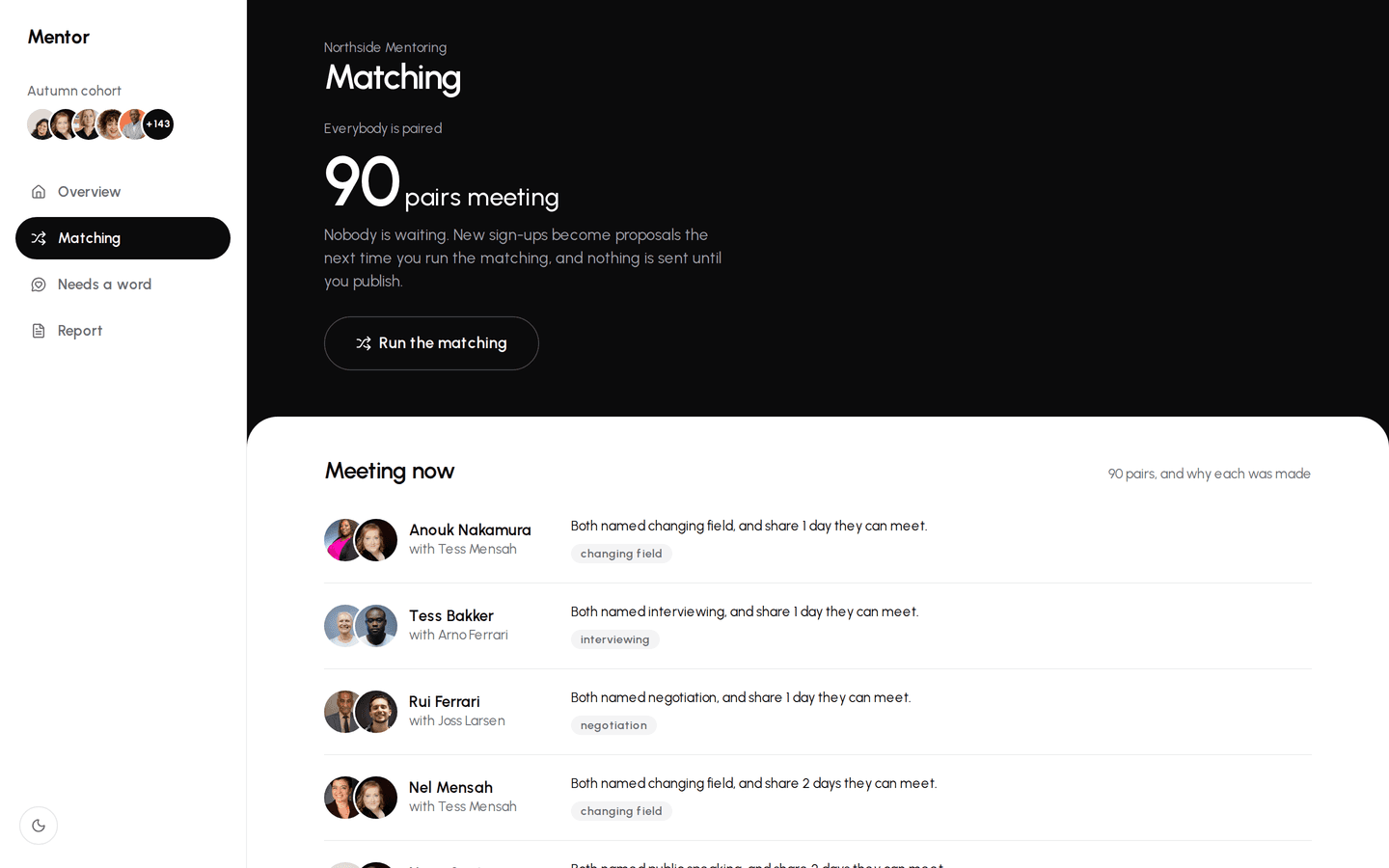
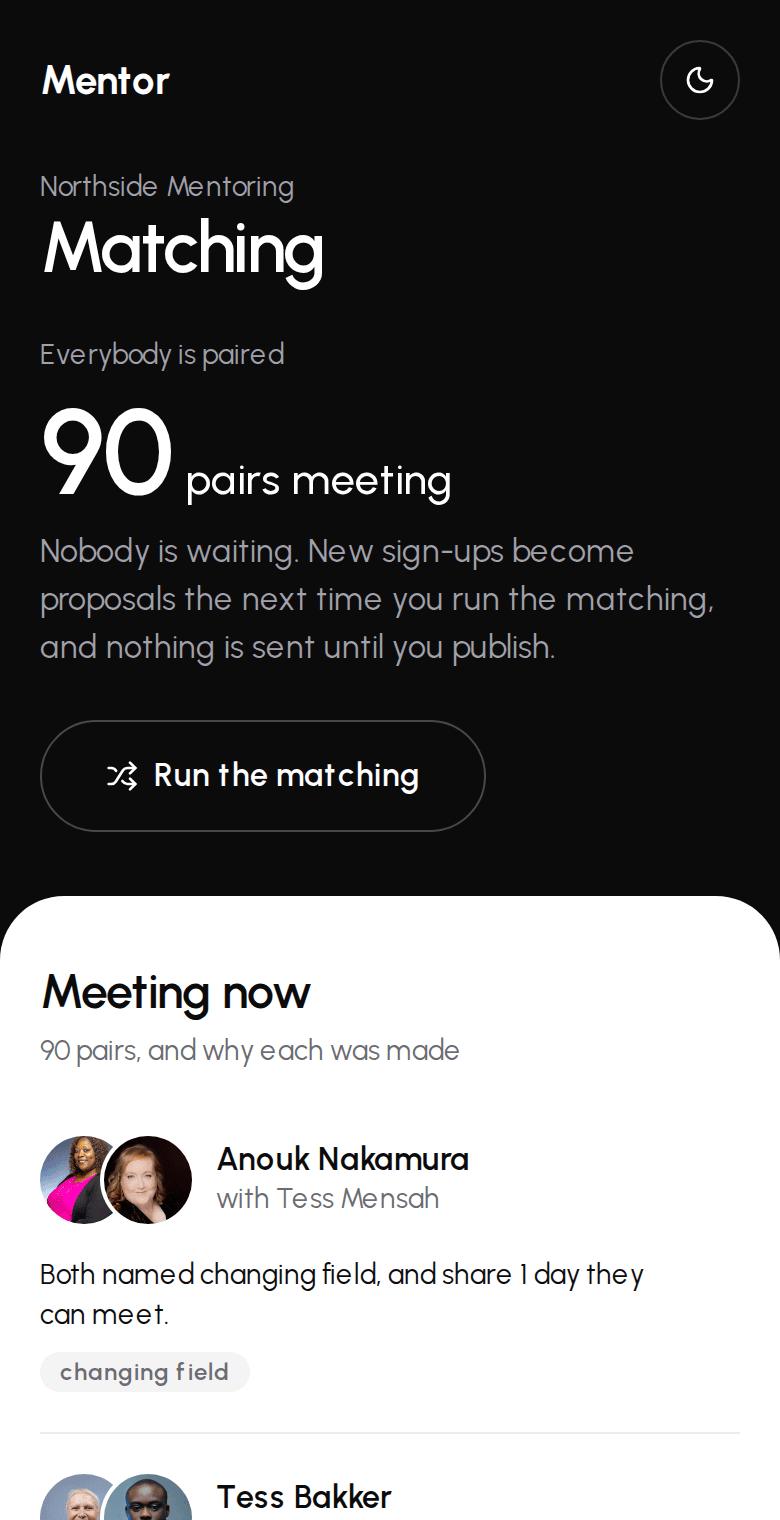
    Mentor: Every pair, and why
  • Matching across the whole group

    Every pair is chosen in one pass, so the last people to sign up don't get whoever is left.

    /programme/drift
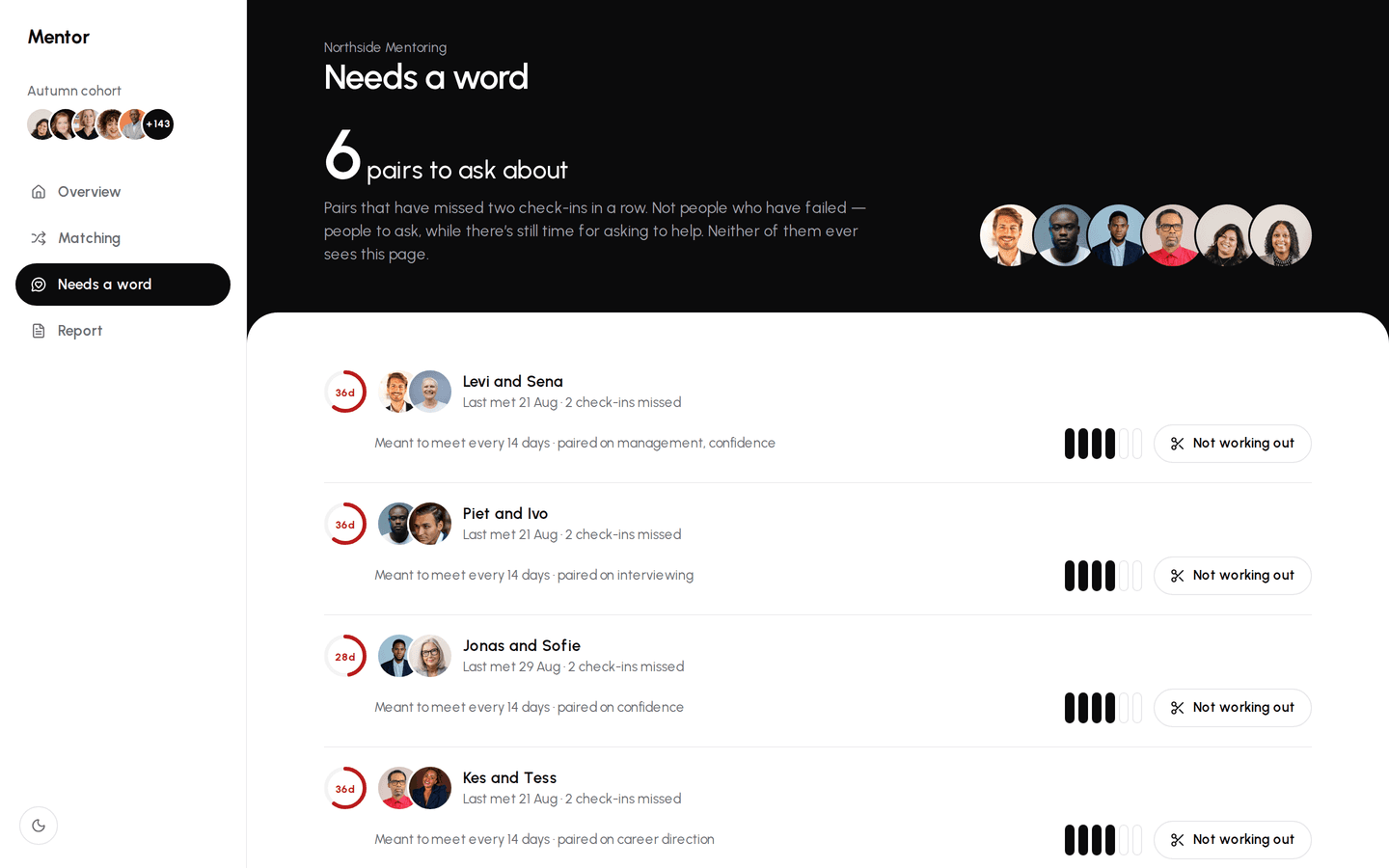
    Mentor: Needs a word
  • A reason on every pair

    Each proposed match says why, for example the topics the two people share.

    /programme/pair
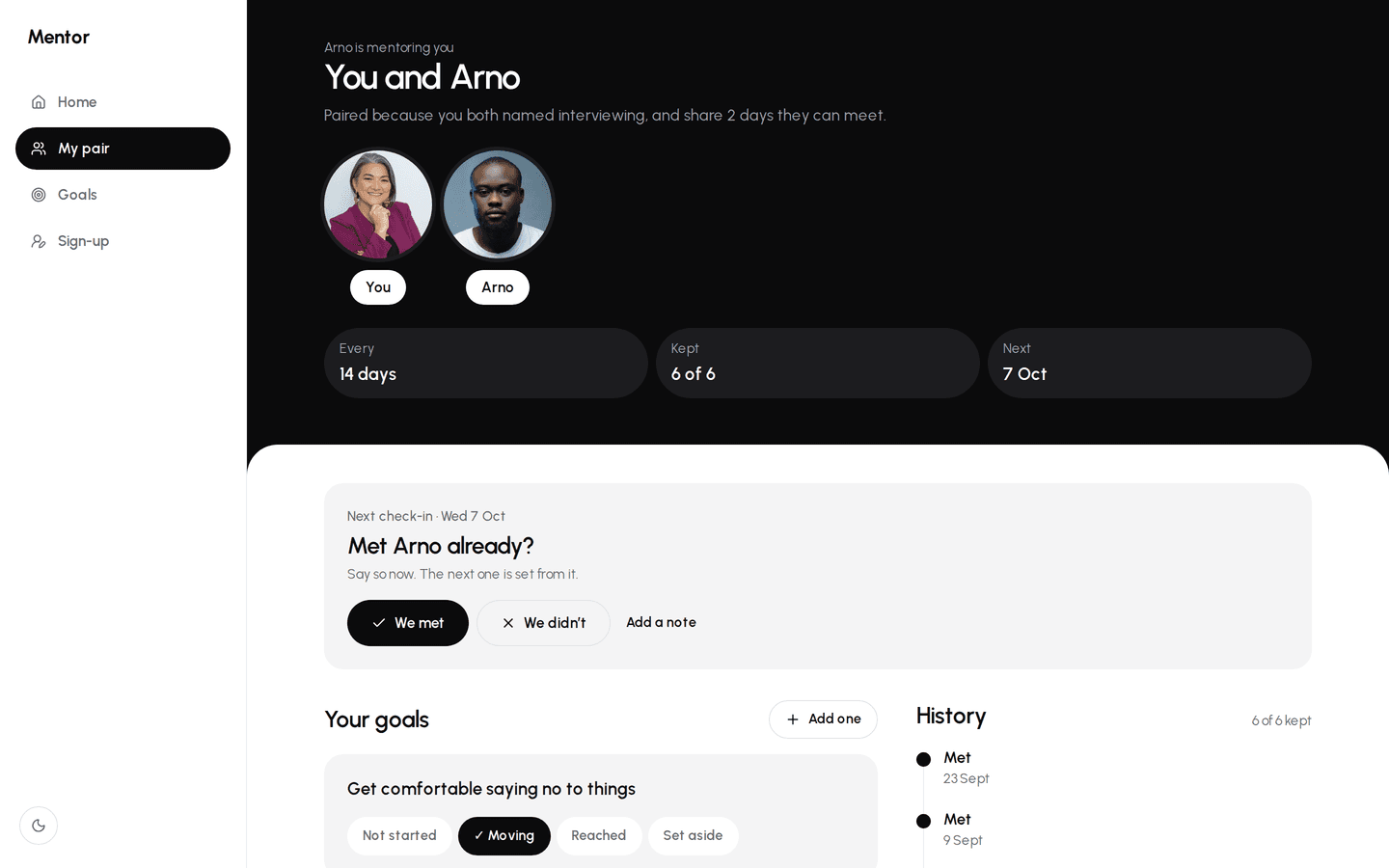
    Mentor: The pair's space
The problem

What problem does it solve?

Matching usually happens over a long evening in a spreadsheet, in the order people applied. After that the programme runs on trust. A pair that stopped meeting in week three often only comes to light in the end-of-year survey, long after anyone could have helped.

How the demo handles it

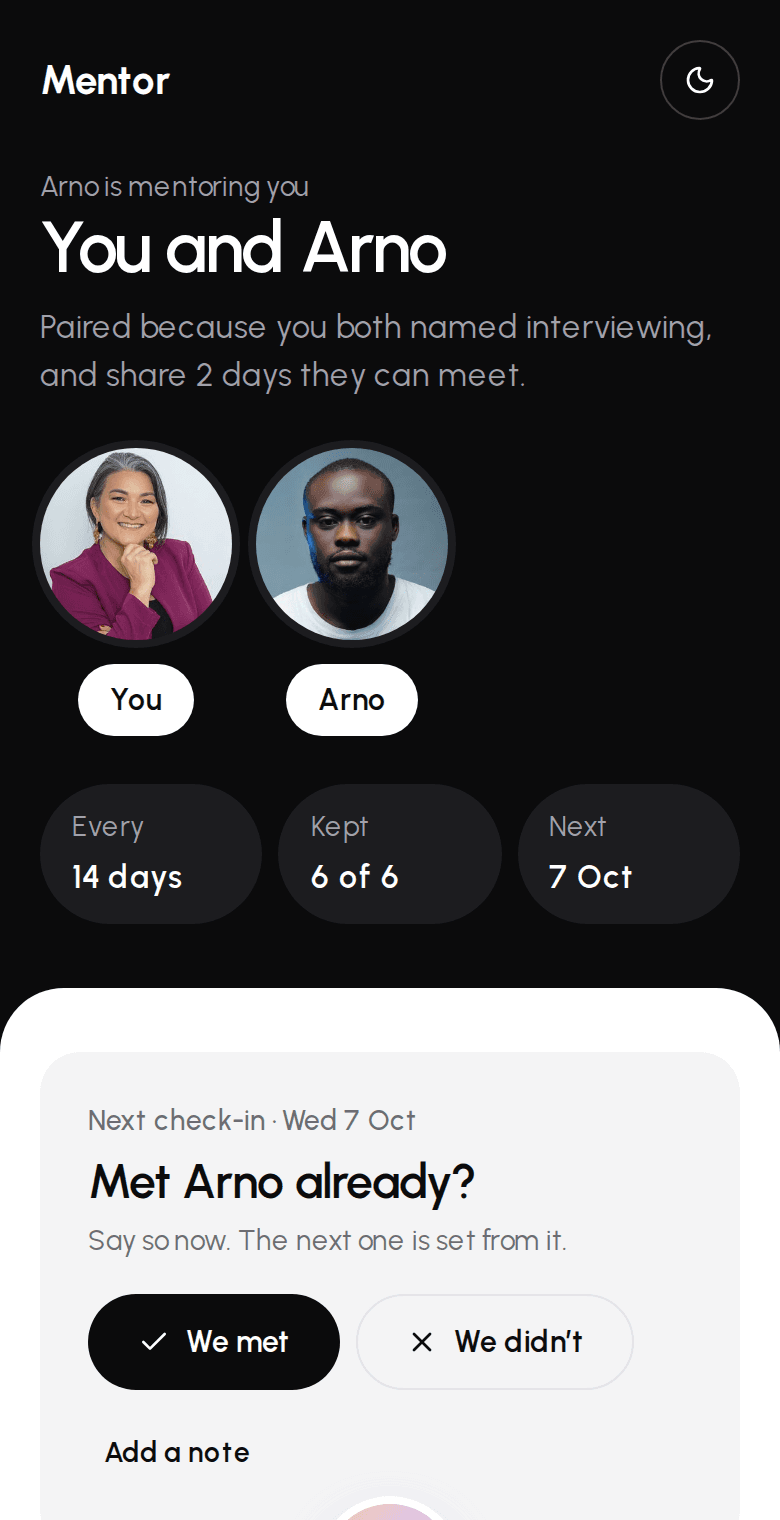
Mentor matches everyone in one pass on topics from a fixed list and the days each person is free, and writes the reason beside every pair. The lead moves anyone they like before publishing, which sends the introductions. From then on, each pair gets a prompt on the schedule they agreed, and two missed check-ins in a row put them on a short list for the lead.

  • The lead has the final say

    The lead can move anyone before publishing. Nobody is introduced until they do.

  • Pairs that need a word

    A short list of pairs that missed two check-ins in a row, with the days since each last met.

  • A report for funders

    A PDF of meetings kept and goals progressed, taken from a record that is never edited after the fact.
Try it yourself
/programme/matching
Mentor: Every pair, and why, on a desktop
Mentor: Every pair, and why, on a phone
/programme/pair
Mentor: The pair's space, on a desktop
Mentor: The pair's space, on a phone
Design choices

Why is it built this way?

  • Everyone is matched together

    Matching one person at a time gives the best mentors to whoever comes first. Mentor finds the best set of pairs for the whole group.

  • Topics come from a fixed list

    With free text, "presenting" and "public speaking" never match. A fixed list makes shared interests comparable.

  • A missed check-in keeps the schedule

    The next reminder still goes out. Answering "we didn't meet" is recorded, and it's what the needs-a-word list uses.

  • Nothing is public

    Mentees can't see each other's goals, only the lead sees why a pair ended, and milestones are private to whoever earned them.

Screens

What does it look like on a computer and a phone?

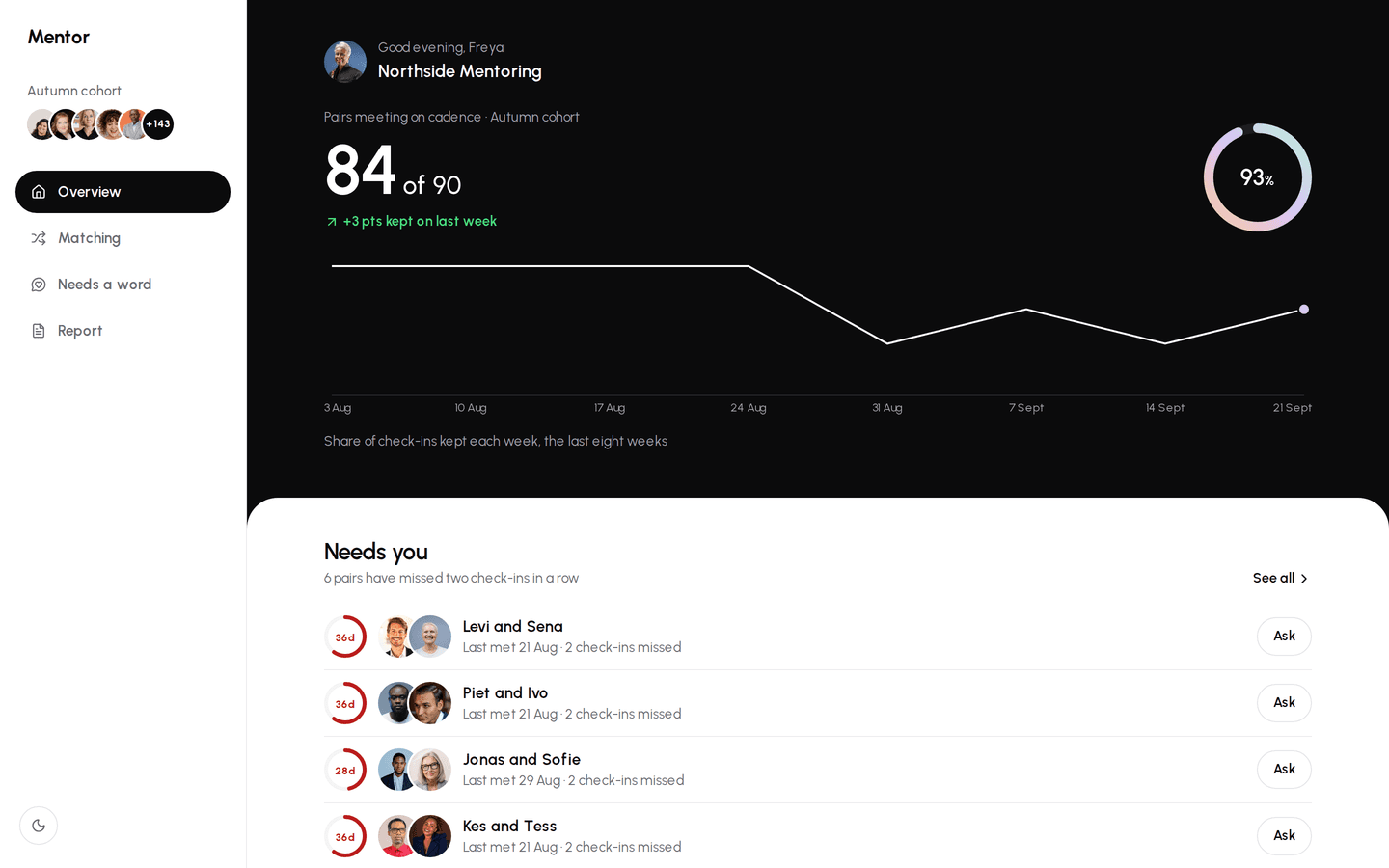
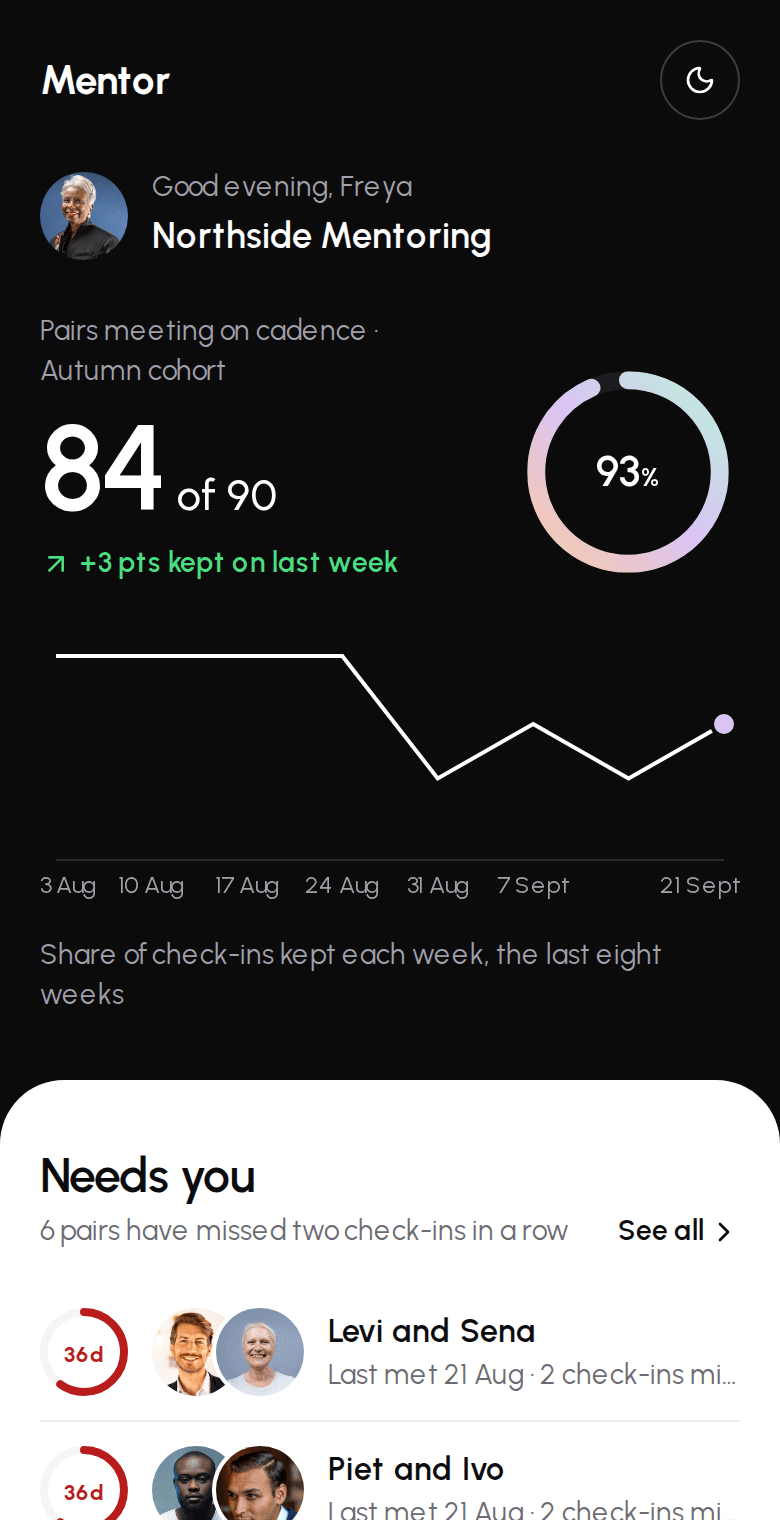
In the demo, 84 of 90 pairs are on schedule. Below that are the pairs that need a word and the days since each last met.

/programme
Mentor: The programme, on a desktop
Mentor: The programme, on a phone

What is it built with?

Common, well-documented tools, so any developer you hire later can pick it up and keep working on it. Hover over or tap any of them to see what it does.

Who uses it

Who would use Mentor, and when?

  • Runs the matching on the sign-ups, swaps a few pairs they know better about, and publishes, which sends the introductions.

    A programme lead at launchScenario

  • Share one small space with their goals, how often they meet and the check-ins they've kept.

    A mentor and mentee mid-programmeScenario

  • Opens the needs-a-word list and gets in touch with the pairs that have stopped meeting, while a nudge can still help.

    The lead a few weeks inScenario

FAQ

What do people ask about Mentor?

  1. 01Can I try Mentor before talking to anyone?

    Yes. The demo is a working app with sample data. Ask for access and we'll email you a sign-in link. Nothing you change there affects anyone.

  2. 02Is it cloud or local?

    Cloud. Your team signs in from anywhere, on a phone, a laptop or the shop computer.

  3. 03Is it premade, adapted or custom?

    Custom. We'd build yours from scratch, using this demo as the starting point for the conversation.

  4. 04What does it run on?

    Next.js 16, TypeScript, Supabase, PostgreSQL, Row-level security, Resend, React PDF, Magic-link sign-in.

  5. 05What problem is it solving?

    Matching usually happens over a long evening in a spreadsheet, in the order people applied. After that the programme runs on trust. A pair that stopped meeting in week three often only comes to light in the end-of-year survey, long after anyone could have helped.

Want to try Mentor?

It's a working app with sample data. Ask for access and we'll email you a sign-in link, usually within a business day.

Request the demo