DashForge
← All work

Climbing gyms

Belay

Scan the tape at the start hold. Log the send before you are off the mat.

Route tracking, setting and competitions for a climbing gym. A QR sticker at the start hold opens the route on a phone with no account needed, the send feed on the wall display updates live, and the setting team can see which of their routes nobody is touching.

CloudPremadeLive demo
Log a send
3 taps

from a QR sticker, no account

Send feed
Live

wall display and phones, same socket

Ladder
Live routes only

resets when the wall does

What was going wrong

A gym's routes lived on a whiteboard by the desk and in the setters' heads. Members tracked their own climbing in a notes app, so the gym had no idea which lines were being used, and nobody found out a route was too hard until it had been up for six weeks. Comp day was a spreadsheet and a shouted running total.

What we built

Put the route itself on the internet, reachable from the tape. Everything else follows from that: a member can log a send without an account decision, so they do; the gym gets traffic data for free; the setters get a strip list built from numbers. The competitive layer ranks on the routes currently on the wall, which means it resets itself every reset. Comps run on the same data with a judging screen on top.

What it looks like

Every screen shown on a desktop and on a phone, because half of these are used standing up.

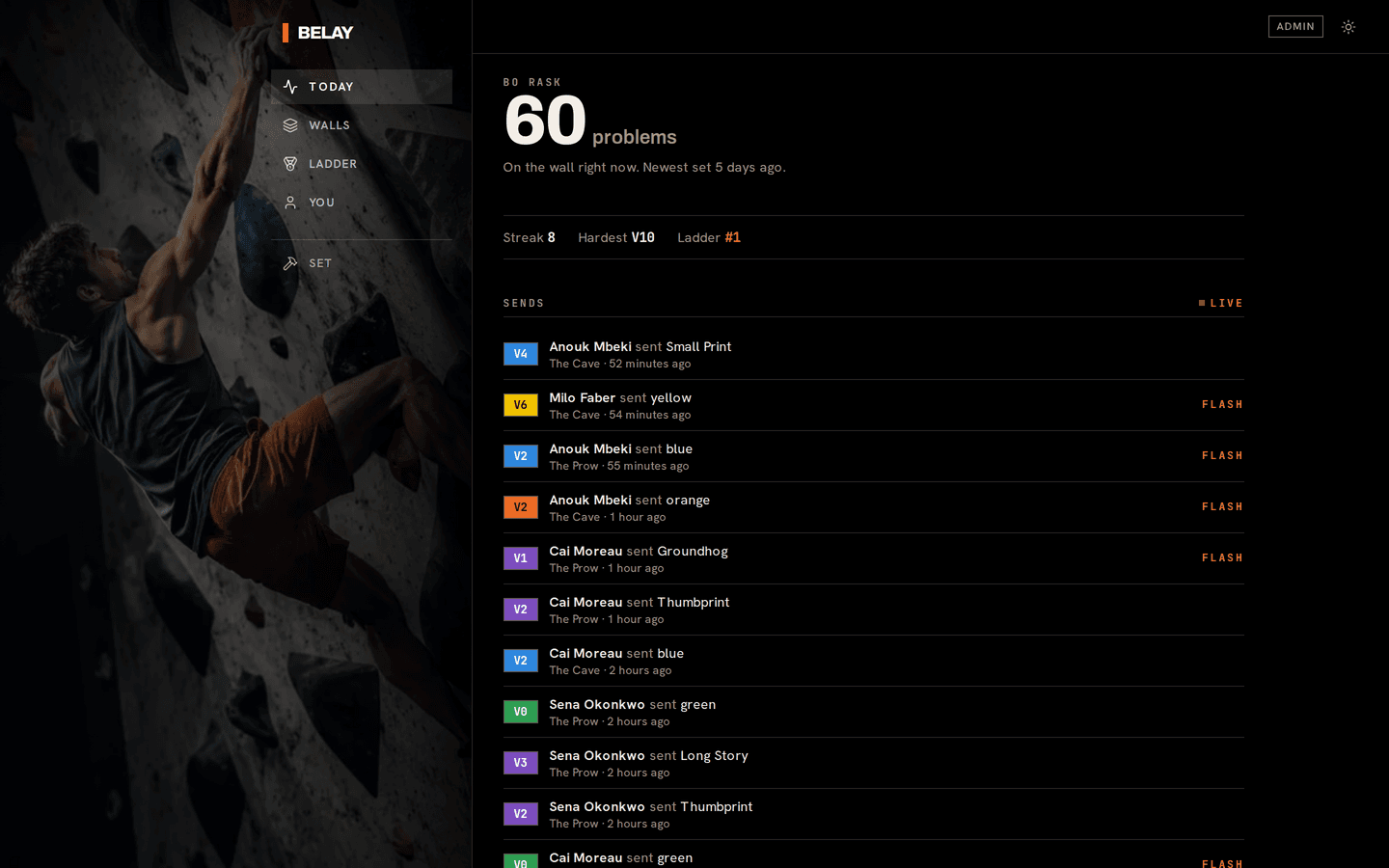
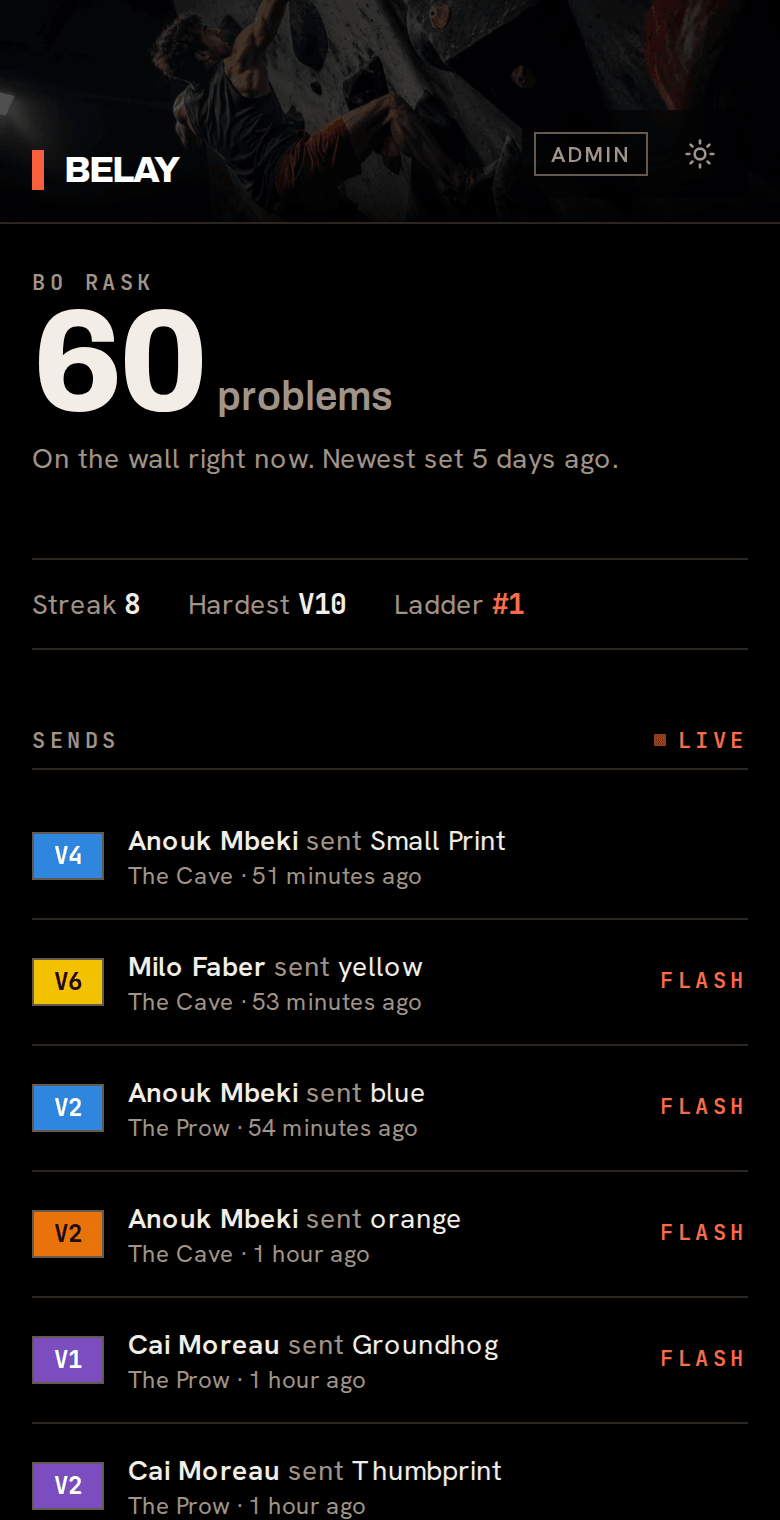
The gym, this week

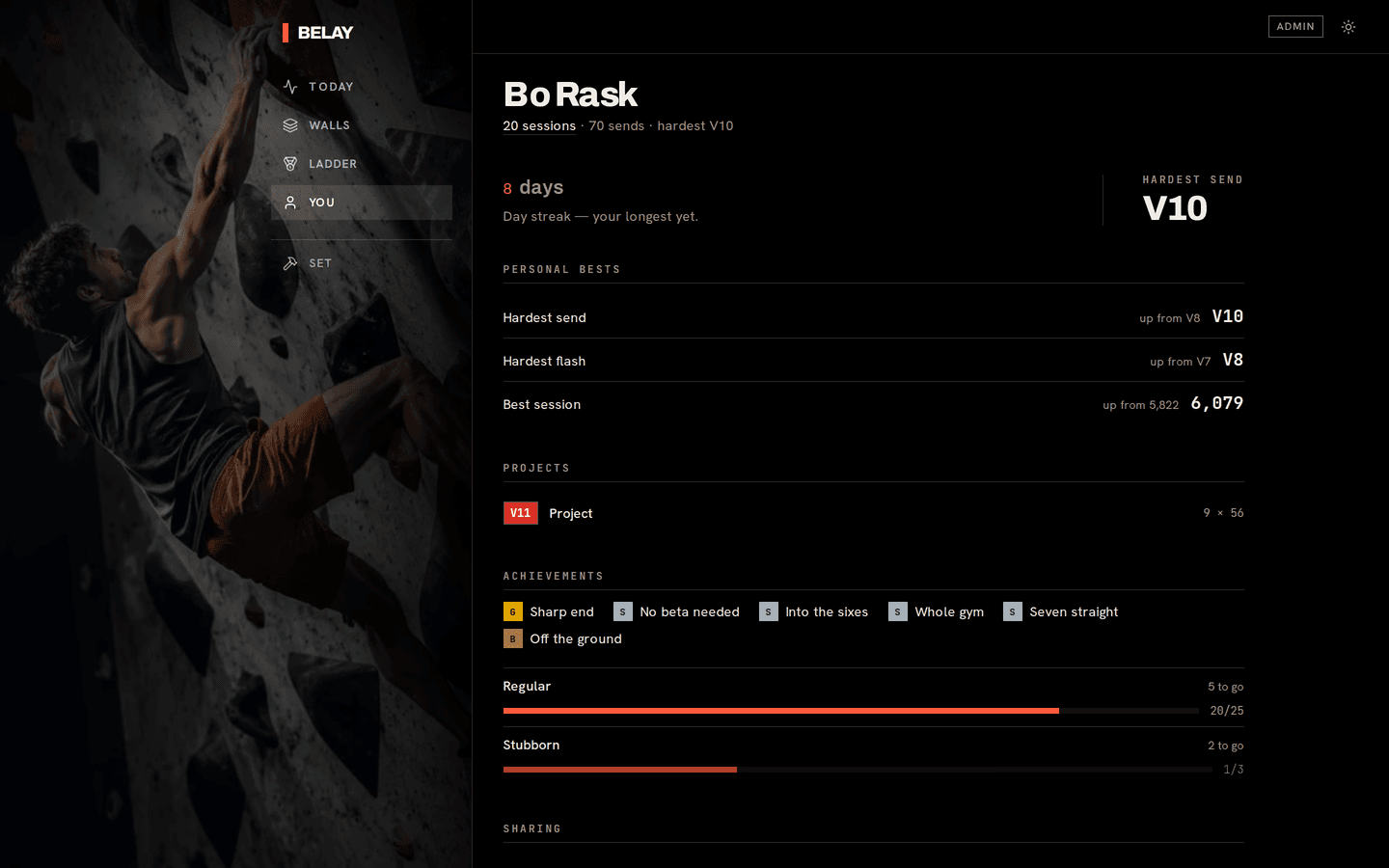
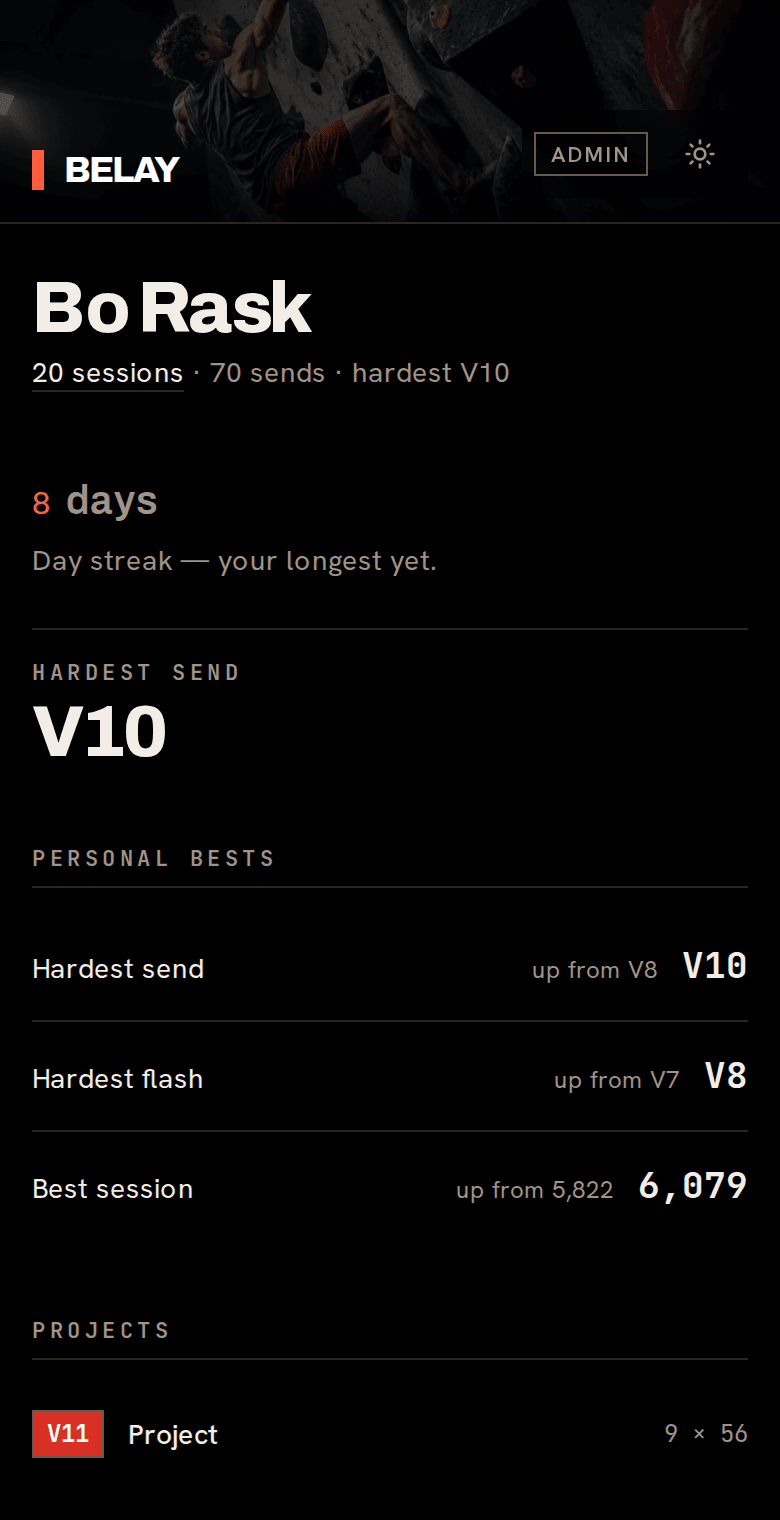
What is new on the wall, what is busy, and where your own climbing has got to. The first screen a member sees after signing in.

/gym

/gym

Desktop capture

1440 × 900

9:41

Mobile capture

390 × 844

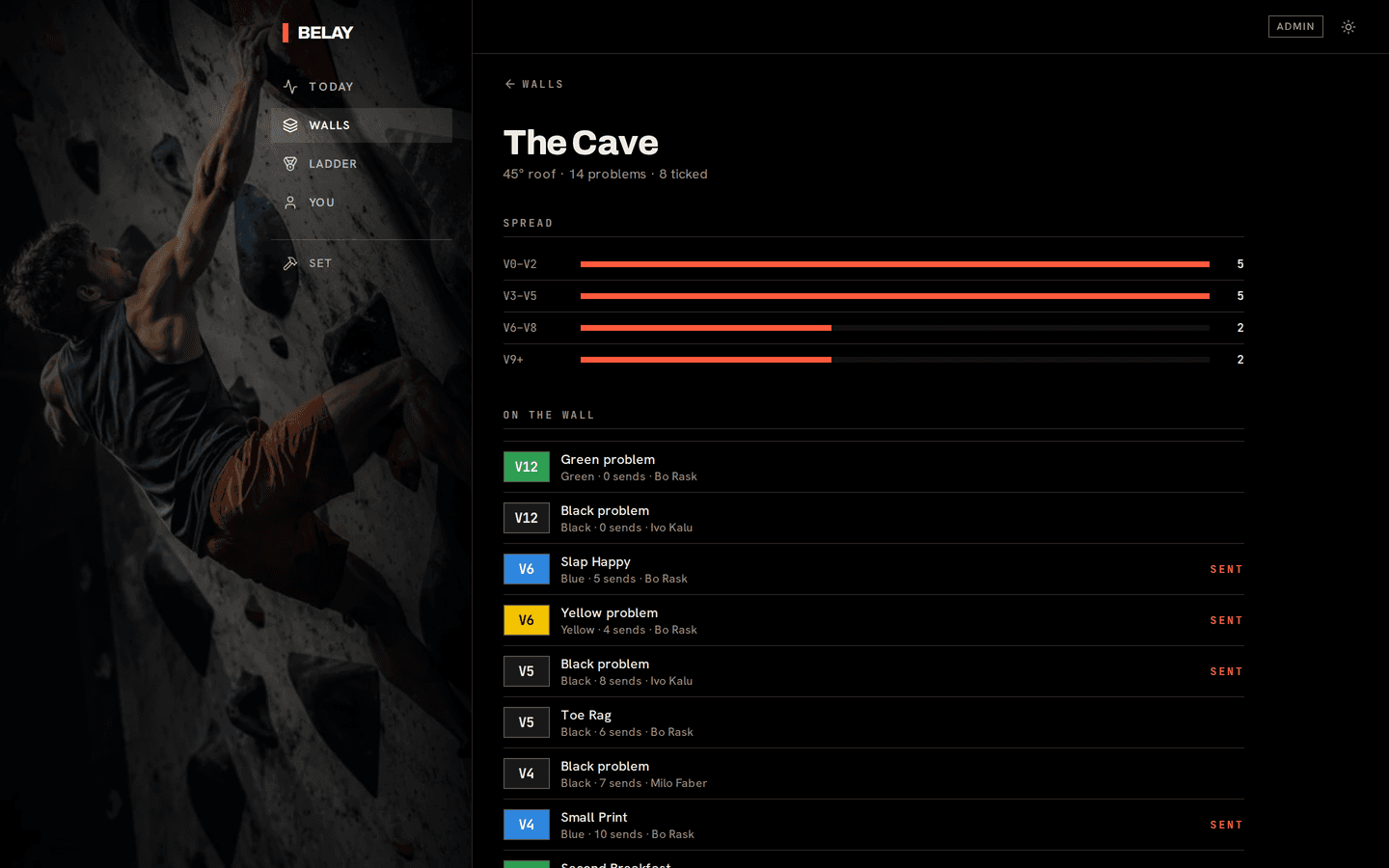
A route, from the sticker

The page the QR code opens. Grade, setter, the send list, and one button — reachable by somebody who has never made an account.

/r/[slug]

/r/[slug]

Desktop capture

1440 × 900

9:41

Mobile capture

390 × 844

The screen by the mats

Sends as they land, the day's numbers and what went up this week. Built to be read across a room and left running all day.

/display

/display

Desktop capture

1440 × 900

9:41

Mobile capture

390 × 844

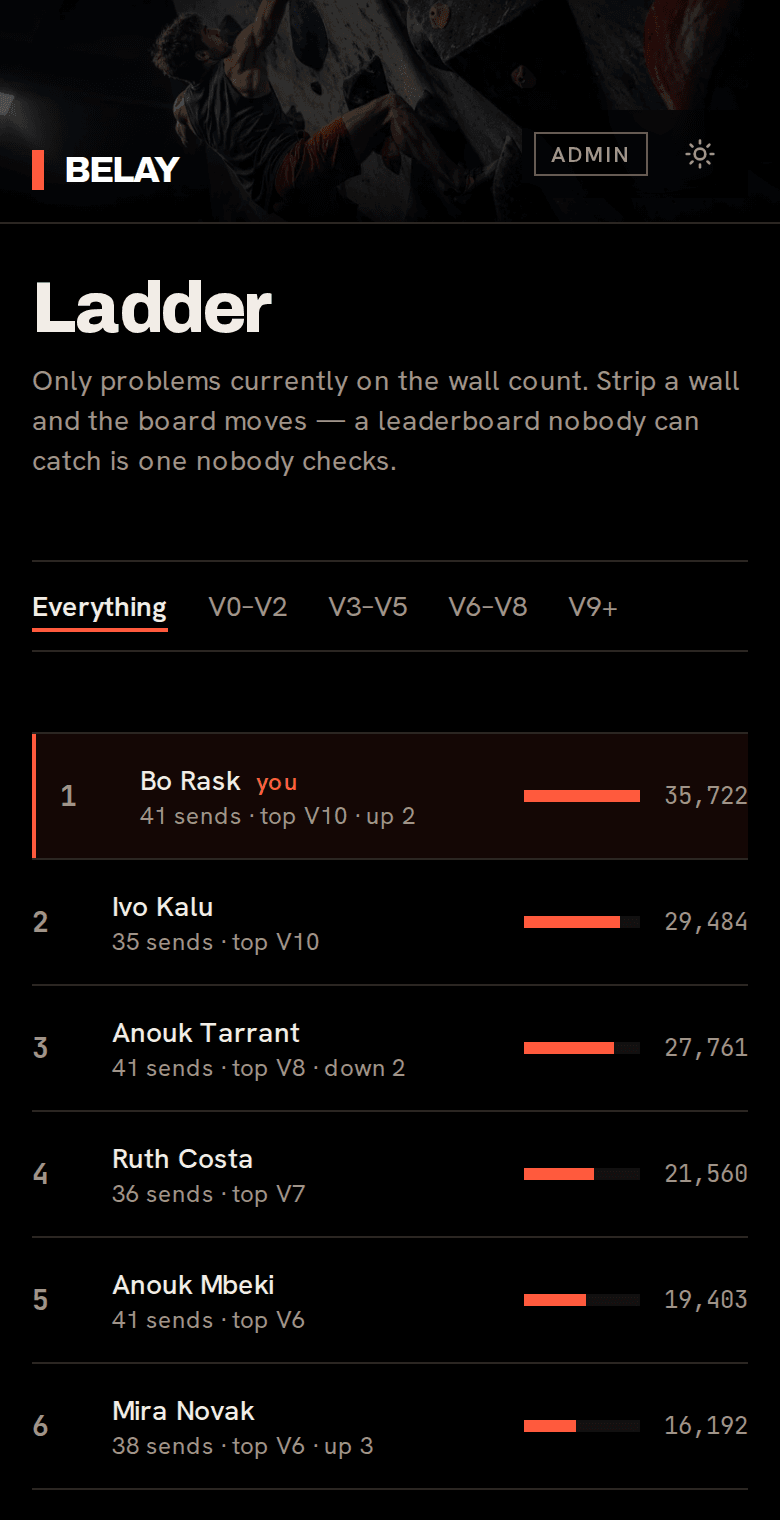
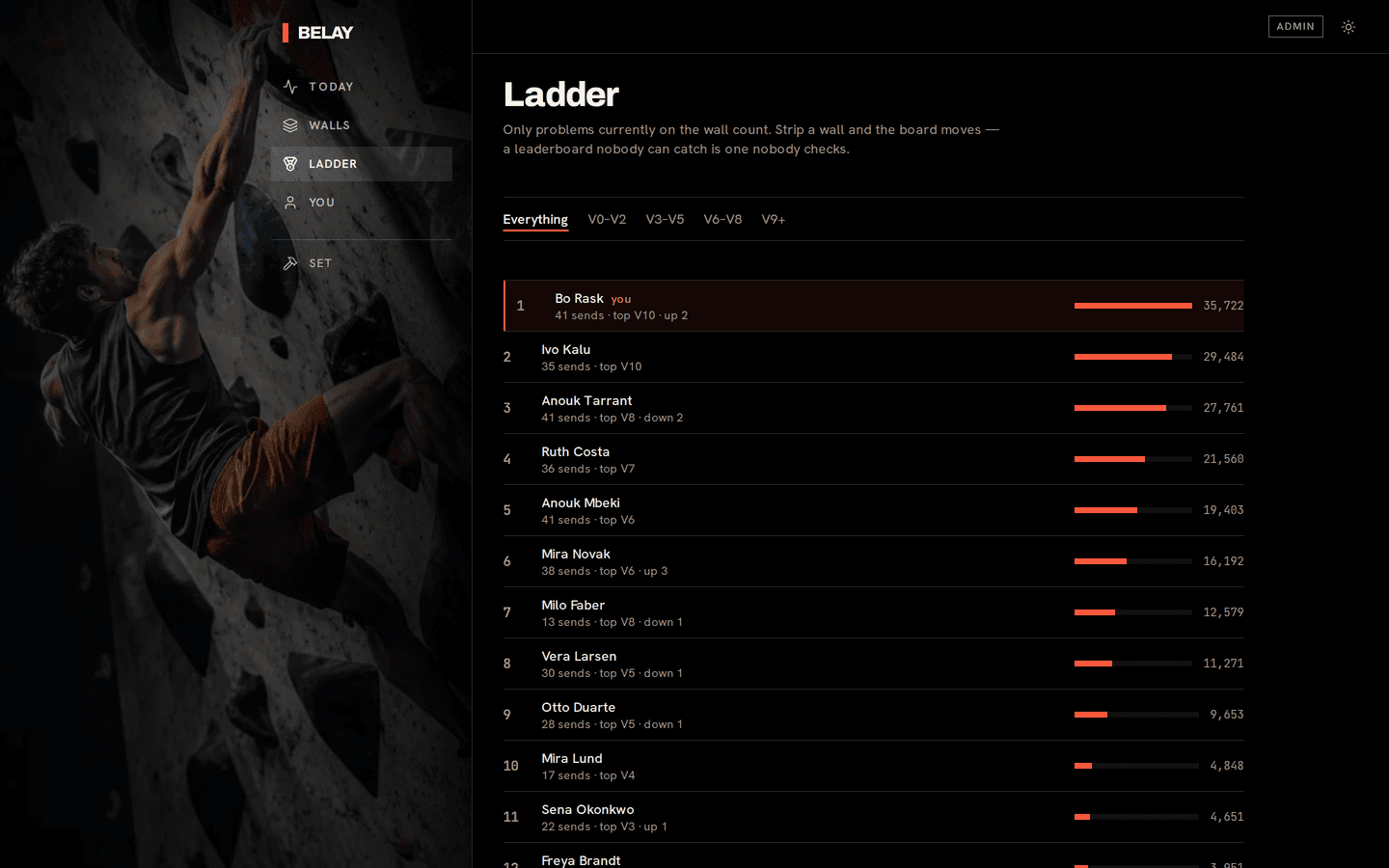
The ladder

Ranked on the routes currently on the wall. Points from a stripped section do not count, which is what stops it becoming a seniority list.

/gym/ladder

/gym/ladder

Desktop capture

1440 × 900

9:41

Mobile capture

390 × 844

Comp scoring

The judge's screen during a competition — attempts in, standings out, on a tablet held in one hand.

/gym/comps/[id]/judge

/gym/comps/[id]/judge

Desktop capture

1440 × 900

9:41

Mobile capture

390 × 844

What it does

Who reaches for it, and when

A member between attempts

Scans the tape, sees the grade and who else has done it, logs the send in three taps with chalk still on their hands.

The setting team on a Tuesday

Strips the lines nobody climbed and keeps the ones with traffic, off numbers rather than off memory.

The desk on comp day

Runs scoring from a tablet, and the standings on the big screen are the same standings the judge is looking at.

What makes this one different

  1. The ladder only counts live routes

    Points from a wall that was stripped in March are not an achievement, they are a head start. Ranking on what is currently up is the product decision the whole competitive layer is built around.

  2. Realtime that respects permissions

    The send feed subscribes as the signed-in member, so the same row-level rules that guard a page guard the socket. It is easy to ship a live feed that is silent for everyone but an admin; this one was tested the other way round.

  3. Two pages with no session at all

    The QR route page and the wall display never have a signed-in user and never will. They are the only two things in the app allowed past the normal auth path, and everything a member does goes the long way round.

  4. Grades are integers until they are rendered

    V10 sorting before V9 is the classic bug in every climbing app. The scale never becomes a string until the moment it is printed on the screen.

Built with

What each piece is doing here — the people who read this section are usually the ones who would have to maintain it after us.

Want something like Belay?

It does not have to be your industry — the underlying problem is nearly always the same. Tell us how the work moves through your business and we will tell you what it would take.

Every project is quoted on its own. Turnaround starts at two weeks.